
 EN
EN
Click to Enable
The global used‑car trade is undergoing a tectonic shift, and at its centre is China. In 2020, the country exported just 4,300 second‑hand vehicles. By 2024, that number had exploded to over 436,000 units – a hundredfold increase in four years. With 2025 volumes already surpassing 600,000 and 2026 on track to reach 800,000, China has firmly established itself as a primary supply hub for used cars worldwide. From Russian auto auctions to Nigerian dealerships, from Kazakh trading posts to Dubai’s re‑export zones, overseas buyers are asking the same question: why are Chinese used cars suddenly so irresistible?
The answer starts with sheer availability. China today has more than 359 million vehicles in operation – the largest national fleet on the planet. Every year, millions of trade‑ins, fleet renewals, and lease returns feed a domestic used‑car market that is vastly oversupplied relative to local demand. This glut drives down prices to levels that are exceptionally competitive on the global stage. For a typical three‑ to five‑year‑old sedan or SUV, buyers can often secure a unit at 20‑30% less than comparable Japanese or Korean models, even after shipping and import duties. In price‑sensitive markets across Africa, Southeast Asia, and Latin America, that margin can determine whether a dealer turns a profit or a loss.
Yet price alone does not tell the whole story. Chinese used cars come with a level of standard equipment that surprises many overseas buyers. Rear‑view cameras, touchscreen infotainment, panoramic sunroofs, automatic climate control, and advanced driver assistance systems – once considered premium extras – are now commonplace even in mid‑range domestic brands. By contrast, Japanese and Korean used cars of the same vintage often feature bare‑bones trims, requiring costly aftermarket upgrades to meet local expectations. This “value‑for‑money” proposition resonates strongly with buyers in emerging economies, where every dollar counts and consumers demand maximum functionality for their spend.
Another draw is the astonishing diversity of models. China’s domestic market hosts a full spectrum of vehicles: from affordable workhorses like Geely, BYD, and Great Wall, to joint‑venture stalwarts such as Volkswagen, Toyota, and Honda, all the way to premium offerings from BMW, Mercedes‑Benz, and Audi. Whether a dealer needs economical sedans for urban families, rugged SUVs for African terrain, pickup trucks for commercial fleets, or luxury saloons for affluent clients, China’s used‑car ecosystem can supply them – often within weeks of placing an order.
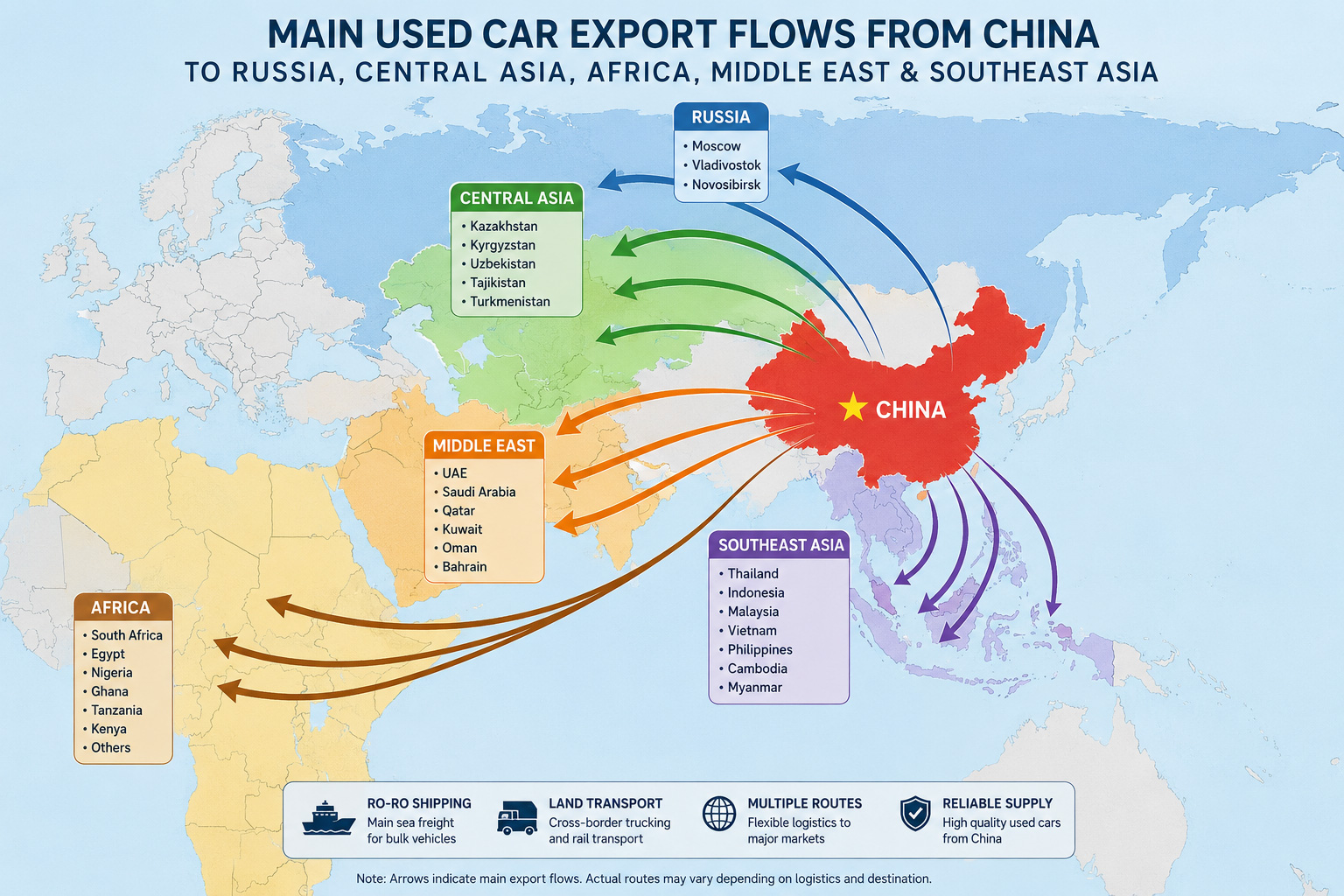
Geography also plays a crucial role. China’s proximity to key consuming regions provides a logistical edge that European and American exporters cannot match. Shipping from Shanghai or Guangzhou to Southeast Asia takes only a few days; overland rail and road routes to Central Asia and Russia are well‑established; and maritime links to the Middle East and East Africa are frequent and reliable. Major ports like Shenzhen, Ningbo, and Tianjin have developed specialised roll‑on/roll‑off terminals that can process thousands of vehicles per week, drastically reducing waiting times and inventory carrying costs. For overseas dealers, this means faster turnover and lower working capital requirements – critical advantages in a business where cash flow is king.
Breaking down regional demand in the first half of 2026 reveals a multi‑polar landscape. Russia remains the largest single market, having imported roughly 35,000 used cars from China between January and May. Russian buyers favour vehicles no older than five years, compliant with Euro‑5 emissions, and fitted with the ERA‑GLONASS emergency system. Popular picks include the Volkswagen Golf, Toyota Corolla, Haval H6, and Geely Emgrand. Notably, new‑energy vehicles (NEVs) now account for over 30% of these shipments, with BYD’s Dolphin and Song Plus EV leading the charge – a sign that even in cold climates, the electric transition is gaining ground.
Central Asia forms another vibrant cluster. Kyrgyzstan took in about 15,000 units, mostly economy sedans aged three to five years. Uzbekistan preferred vehicles priced under $7,000, with manual transmissions dominating. Kazakhstan, meanwhile, showed strong appetite for SUVs and pickups from Great Wall and Haval, driven by a booming construction and mining sector. Across these countries, the Belt and Road Initiative has improved cross‑border infrastructure, making it easier and cheaper to move vehicles overland from China’s western provinces.
In Africa, Nigeria imported roughly 6,500 used cars from China, with a clear preference for durable, easy‑to‑repair models like the Toyota Corolla, Honda Civic, Great Wall pickup, and Wuling minivan. As Japanese used‑car supplies tighten and prices climb, Chinese vehicles aged five to eight years are rapidly winning market share among Africa’s highly price‑conscious buyers. Similarly, Kenya and Algeria are seeing growing inbound shipments, particularly of small SUVs and compact hatchbacks that suit local road conditions and fuel prices.
The Middle East presents a different picture. The UAE, especially Dubai as a re‑export gateway, imported about 10,000 units, but here the demand tilts towards premium SUVs – the Toyota Land Cruiser, BMW X5, and Mercedes GLC are top sellers. High‑end NEVs from BYD and Tesla are also finding buyers among affluent Gulf residents who value both performance and environmental credentials. Dubai’s free‑zone logistics and established trade links with the wider region make it a natural hub for redistributing Chinese used cars to Iran, Iraq, and even parts of Europe.
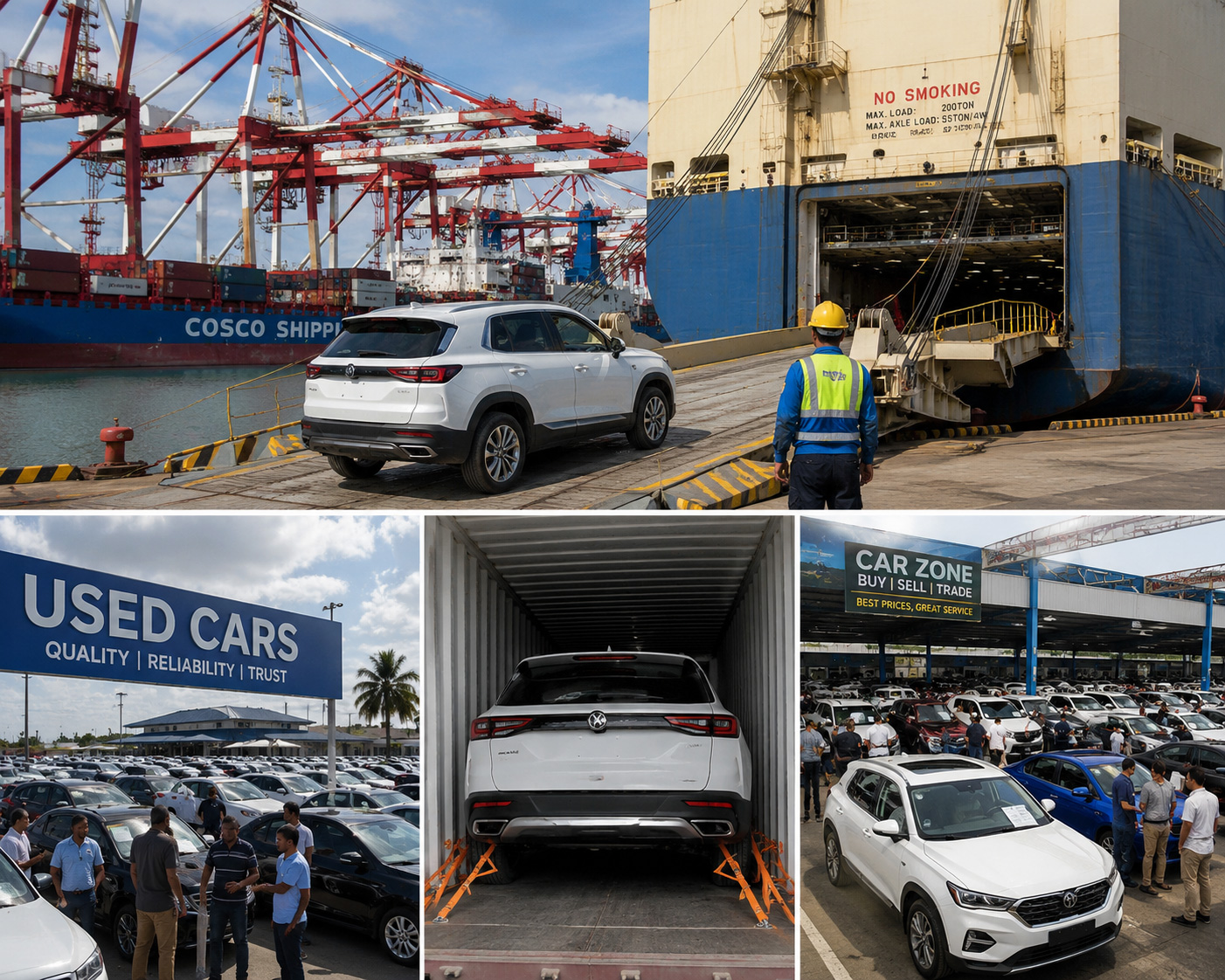
Despite these bright spots, overseas dealers face persistent challenges. The most frequently cited headache is after‑sales support. While Chinese manufacturers have made strides in building global service networks, many used‑car exporters are small operators who cannot offer the same warranty and parts availability as established Japanese or German counterparts. This has led to a growing trend of “localisation” – some large Chinese trading firms are now setting up overseas warehouses, partnering with local garages, and even offering vehicle‑specific maintenance training to mechanics in target countries. In Russia, for instance, several Chinese exporters have established service centres in Moscow and Vladivostok, stocking common spare parts and providing hotline support in Russian.
Payment and currency risks also loom large, especially in African and Latin American markets where foreign exchange controls are tight and delays in settlement are common. To mitigate this, some dealers are turning to cryptocurrency or trade‑finance instruments backed by Chinese banks, though these solutions are still in their infancy. Meanwhile, the sheer number of new entrants – over 3,000 registered exporters in China as of mid‑2026 – has intensified competition, driving down margins and putting pressure on quality. The days of easy arbitrage are fading; the survivors will be those who invest in branding, customer service, and supply‑chain reliability.
Looking ahead to the second half of 2026 and beyond, industry observers agree that China’s used‑car export boom is entering a more mature phase. The initial volume surge has proven that Chinese cars can compete on price and features. The next battle will be fought on trust and convenience. Overseas dealers increasingly demand transparent vehicle history reports, independent inspection certificates, and flexible financing options. In response, a handful of Chinese platforms are now integrating blockchain‑based provenance tracking and offering online auctions with real‑time translations, making it easier for international buyers to participate without travelling to China.
For dealers in Lagos, Almaty, or Ho Chi Minh City, the calculus remains clear: China offers an unbeatable combination of volume, variety, and value. With a fleet that continues to grow by millions each year, and with domestic new‑car sales still among the world’s highest, the supply of quality used vehicles is unlikely to dry up anytime soon. What has changed is the expectation – buyers no longer view Chinese used cars as a cheap gamble, but as a reliable mainstay of their inventory.
As one Kazakhstan-based importer put it in a recent interview: “Five years ago, we had to explain to our customers what a Chinese car was. Now they come to us asking specifically for Chinese models. The reputation has been built on real performance and real savings.” That sentiment echoes across the continents, from the snow-covered roads of Siberia to the sun-baked highways of the Sahel. China’s used cars have gone global – and they are here to stay.
The road ahead is not without potholes, but the direction is unmistakable. For those willing to build long-term partnerships, invest in after-sales infrastructure, and adapt to local tastes, the Chinese used-car market offers a growth opportunity that few other sectors can match. In a world of supply-chain disruptions and inflationary pressures, the promise of affordable, well-equipped, readily available vehicles is a powerful draw – and China is delivering on that promise at scale.