 EN
EN
Click to Enable
1. Vehicle Overview
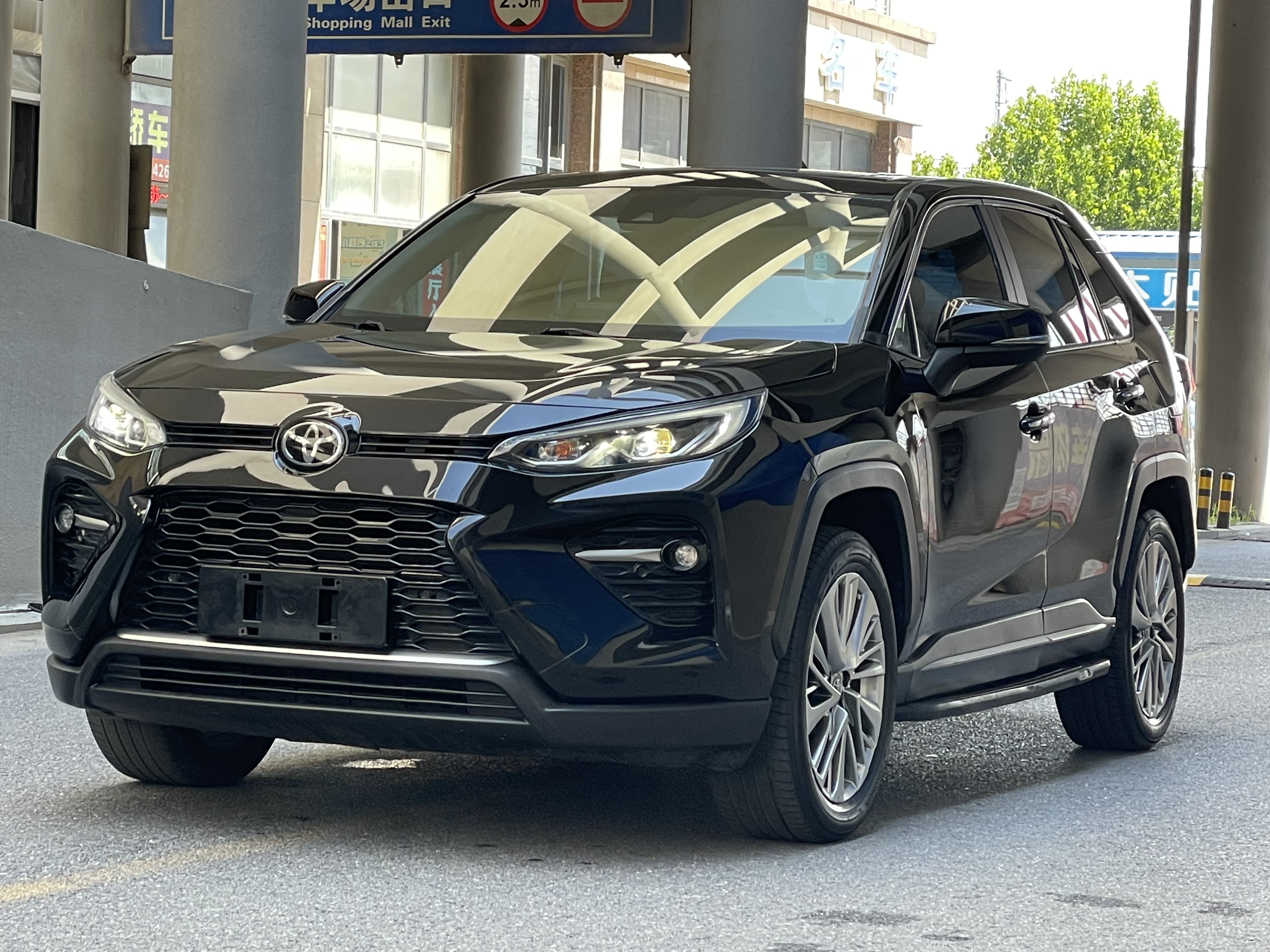
As GAC Toyota's flagship mid-size SUV, the Toyota Wildlander was first launched globally at the 2019 Guangzhou Auto Show and officially went on sale in 2020. Built on the high-end TNGA-K platform shared with the 8th-generation Camry, it forms the "Land Cruiser Brothers" product series with the Highlander, covering the mainstream mid-size SUV market. After several generations of evolution, the all-new 2026 model underwent a comprehensive upgrade, launching 9 configurations covering three powertrain versions: 2.0L gasoline, 2.0L hybrid, and 2.5L hybrid 4WD, with an official guide price range of 169,800 to 230,800 RMB. The 2026 Wildlander positions itself as the "next-generation gasoline vehicle," integrating the refueling convenience of fuel vehicles with the low energy consumption of new energy vehicles. It features a leapfrog upgrade in intelligent driving, cockpit experience, and underlying architecture, becoming a trusted choice for global family users and multi-scenario travel needs with its balanced performance, advanced intelligence, and reliable quality.
2. Core Advantages
2.1 Leapfrog Intelligent Upgrade, Leading the Evolution of Fuel Vehicle Intelligence
The 2026 Wildlander takes intelligent upgrading as the core highlight, equipped with Toyota's latest Toyota Safety Sense 4.0 (TSS 4.0) intelligent driving assistance system. The hardware has been comprehensively enhanced: the number of sensors has increased from 12 to 24, the front camera resolution has been upgraded to 8.3 million pixels, and the millimeter-wave radar detection distance has reached 280 meters, covering more than 200 driving assistance scenarios. It adds functions such as curve wrong throttle suppression, cross-vehicle automatic emergency braking (AEB), and door opening warning, which can predict the intention of adjacent vehicles to cut in 1.2 seconds in advance and identify the "vehicle in front of the front vehicle" to prevent chain rear-end collisions. The intelligent cockpit is equipped with Qualcomm Snapdragon 8155P chip, 15.6-inch ultra-narrow bezel central control screen, and 26.4-inch HUD head-up display, accessing HarmonyOS ecology to support seamless device circulation, four-zone wake-up-free voice interaction, and 10 gesture control functions, fully meeting the localized intelligent needs of Chinese users.
2.2 Fifth-Generation Hybrid Technology, Achieving Ultra-Long Range and Low Fuel Consumption
The 2026 Wildlander adds a 2.0L hybrid version for the first time, equipped with Toyota's fifth-generation intelligent hybrid dual-engine technology, achieving a super-long comprehensive range of 1500km and彻底 eliminating range anxiety. The WLTC comprehensive fuel consumption is as low as 4.59L/100km, which means that daily commuting only requires refueling once a month, and a single tank of fuel can easily cover the round trip from Beijing to Shanghai for long-distance travel. The 2.5L hybrid four-wheel drive version is equipped with a more powerful THS Ⅱ hybrid system, with a maximum system output of 160kW, and the WLTC comprehensive fuel consumption is 5.10L/100km. Toyota's hybrid battery adopts a "shallow charge and shallow discharge" strategy, with a global record of "0 spontaneous combustion and 0 explosion" for 26 million dual-engine models, and the battery life is synchronized with the whole vehicle. Even in extreme cold environments such as Mohe, its low fuel consumption and long range performance have been fully verified.
2.3 Three Advanced Four-Wheel Drive Systems, Mastering All Road Conditions
The Wildlander offers three professional four-wheel drive systems to adapt to different usage scenarios, which is rare in the same level. The DTC dynamic torque control four-wheel drive system is equipped in mid-to-low configuration models, which can switch between front-wheel drive and four-wheel drive in tens of milliseconds, with power distribution between front and rear axles ranging from 100:0 to 50:50, and supports snow, mud, and rock modes. The DTV dynamic torque vectoring four-wheel drive system is exclusive to high-end fuel models, adding two multi-plate clutches at the rear differential, which can transmit all the power of the rear axle to a single wheel, significantly improving off-road capability and handling performance. The E-Four electronic four-wheel drive system is exclusive to hybrid models, realizing electric four-wheel drive through a dedicated rear motor, with no central drive shaft, low power loss, and can distribute front and rear axle torque at 20:80 during rapid acceleration, ensuring stable traction on slippery roads.
2.4 Reliable Quality and Practical Space, Creating a Comfortable Family Travel Experience
The Wildlander adheres to Toyota's consistent quality control standards, with GAC Toyota promising a "lifetime warranty for the three major components" (engine, gearbox, and hybrid battery), backed by the verification of 9 million global users. Data shows that its cumulative failure rate is far lower than the industry average, and the 3-year retention rate ranks among the top in the same level. In terms of space, it has a wheelbase of 2690mm, with sufficient head and leg room in the front and rear rows, and the raised floor in the middle of the rear row is low, ensuring the comfort of middle passengers. The trunk adopts a "double-layer and double-sided adjustable cover" design with waterproof and non-slip functions, and the standard kick-sensing electric tailgate supports five-angle opening and memory functions, which is very convenient for daily use. The whole series is equipped with sports-style seats, and high-end models are equipped with front seat heating and ventilation functions, further enhancing the comfort experience.
3. Technological Selling Points
3.1 TNGA-K Platform and New Domain Control Architecture: The Foundation of Evolution
The Wildlander is built on the TNGA-K high-end platform, which uses a large amount of high-strength steel, and key parts are reinforced with high-strength steel, which improves the anti-collision ability of the body and reduces body deformation during collisions. The 2026 model adopts Toyota's new domain control electronic and electrical architecture, integrating hundreds of ECUs through a powerful domain controller, based on Gigabit Ethernet and Qualcomm Snapdragon 8155P chip, realizing centralized computing power. This architecture supports vehicle FOTA (firmware upgrade) and SOTA (software upgrade), changing the state of traditional fuel vehicles that "are finalized at the factory" and enabling the vehicle to continuously obtain function updates and experience optimization in the future.
3.2 Precision Manufacturing Process: Building Quality with "Zero Error" Standards
The Wildlander is produced in GAC Toyota's Nansha factory, which strictly follows the global unified TPS lean production system, and implements the "self-process completion" standard in each process, ensuring that each link is 100% qualified. In the stamping workshop, the error of the body steel plate is controlled within ±0.5mm, and the mold must be returned to the factory for maintenance after tens of thousands of stampings. In the welding workshop, there are more than 5,000 welding points in the whole vehicle, each of which must pass ultrasonic testing, and rework is required if the strength is insufficient. The 2.0L Dynamic Force engine adopts high-precision laser cladding valve seat technology, and the thickness error of the alloy coating is less than 1/10 of a hair. In the final assembly workshop, workers must pass the "craftsman certification" assessment, and the torque error of each screw tightening does not exceed ±2 N·m. The whole production process is covered by more than 2,500 real-time monitoring devices, which automatically intercept defective products.
3.3 Comprehensive Quality Control: Strict Testing Ensures Driving Safety
Each Wildlander must go through 1,500 inspection items before leaving the factory, and the quality standard is higher than that of "star model vehicles". It has passed strict extreme environment tests, including high and low temperature tests from -40°C to 85°C, altitude tests up to 4,500 meters, and corrosion tests equivalent to 10 years of exposure in coastal environments. The hybrid battery has undergone 850,000 kilometers of durability testing, and the attenuation rate is less than 15%, ensuring long-term reliable use. In terms of passive safety, it adopts a high-rigidity GOA body, is equipped with 7 airbags as standard (including knee airbags), and has achieved excellent results in collision tests by third-party authoritative institutions such as C-IASI, providing a solid safety barrier for passengers.
3.4 Efficient Powertrain Technology: Balancing Performance and Environmental Protection
The Wildlander's powertrain adopts advanced technologies to achieve a balance between performance and environmental protection. The 2.0L Dynamic Force engine uses laser cladding valve seat technology, with a thermal efficiency of 40%, and is matched with a Direct Shift-CVT gearbox with a planetary gear structure, realizing smooth shifting without frustration and a 30% improvement in durability. The 2.5L Dynamic Force engine has a thermal efficiency of 41%, adopting a D-4S dual injection system (in-cylinder direct injection + intake manifold injection), which improves fuel efficiency and reduces emissions, meeting the National VI emission standard. The fifth-generation hybrid system optimizes the coordination between the engine and the motor, further reducing energy loss and achieving the dual effects of strong power and low fuel consumption.